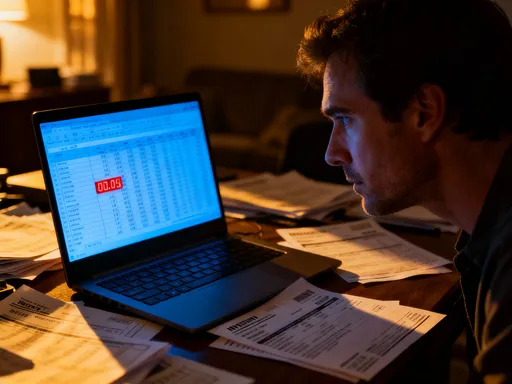
How I Forecast Markets to Survive a Job Loss—My Real Strategy
Losing my job last year hit harder than I expected—not just emotionally, but financially. Overnight, every dollar mattered. That’s when I realized: surviving unemployment isn’t just about cutting costs. It’s about making smart moves *before* the storm hits. I started studying market signals, adjusting my portfolio, and protecting my cash. This is how forecasting helped me stay ahead—and how it can help you, too, when the unexpected happens. What I learned wasn’t from a finance degree or Wall Street connections. It came from necessity, from watching my savings dwindle and realizing that traditional advice didn’t go far enough. I needed more than budgeting apps and coupon clipping. I needed foresight. And that’s exactly what market forecasting gave me.
The Wake-Up Call: When Income Disappears
The day I was laid off, I didn’t just lose a paycheck. I lost a sense of control. My routine shattered. The first few weeks were a blur of panic, phone calls, and spreadsheets. I reviewed every bill, canceled subscriptions, and even considered selling my car. But no matter how much I cut, the numbers didn’t lie: without income, even a well-stocked emergency fund wouldn’t last more than six months. The emotional toll was just as heavy. I felt isolated, ashamed, and afraid of what came next. I wasn’t alone. Millions of workers face job loss every year, not because of poor performance, but due to economic shifts, restructuring, or industry-wide downturns. The common thread? Most are unprepared for the financial reality that follows.
Traditional financial advice often falls short in these moments. We’re told to save three to six months of expenses, avoid debt, and live below our means. All sound principles, yes—but they assume stability. They don’t account for the speed at which uncertainty can unravel a budget. Cutting back on takeout coffee or skipping a vacation might save $50 a month, but that won’t cover a $3,000 mortgage when your income vanishes. The real vulnerability lies not in spending habits, but in the absence of early warning systems. Most people wait until the layoff notice arrives to act. By then, it’s too late to make meaningful adjustments. The time to prepare is before the crisis, not during it.
What I discovered in those early weeks was that financial survival isn’t just about reacting quickly—it’s about anticipating change. And that requires a different kind of awareness. Instead of focusing only on personal habits, I began looking outward. I started paying attention to broader economic indicators: job reports, corporate earnings, consumer confidence. I noticed how certain industries were already showing signs of strain months before the layoffs began. My company wasn’t an exception. It was part of a pattern. Once I saw that, I realized I could have acted sooner. I could have shifted my savings, reduced risk in my investments, or even started networking in more stable sectors. The wake-up call wasn’t just the job loss. It was realizing that I had ignored the signals all along.
Why Market Forecasting Isn’t Just for Traders
When I first heard the term “market forecasting,” I pictured traders in suits, shouting across a floor, analyzing charts with complex algorithms. I assumed it was irrelevant to someone like me—a salaried employee with a 401(k) and a modest investment account. But I was wrong. Market forecasting isn’t about predicting the exact price of a stock tomorrow. It’s about understanding trends, identifying risks, and making informed decisions before events unfold. For everyday people, especially those dependent on a single income, it’s one of the most practical tools for financial resilience.
At its core, forecasting means paying attention to leading indicators—economic data that signal what might happen before it does. For example, when unemployment claims rise, when manufacturing output slows, or when corporate profits decline, these are not just abstract numbers. They reflect real shifts in the economy that eventually affect jobs, wages, and household budgets. A teacher, nurse, or engineer doesn’t need to trade stocks to benefit from this knowledge. They need it to protect their livelihood. By understanding that industries are interconnected, you can see how weakness in one sector might spill over into others. A downturn in tech could reduce advertising budgets, which affects media companies, which then impacts marketing professionals. These ripple effects matter.
What makes forecasting powerful is that it shifts your mindset from passive to proactive. Instead of waiting for a crisis, you begin to look for clues. You start asking: Is my industry hiring or cutting? Are interest rates rising, which could slow down consumer spending? Are companies in my field reporting lower earnings? These aren’t speculative questions. They’re based on publicly available data from sources like the Bureau of Labor Statistics, the Federal Reserve, and quarterly financial reports. You don’t need a Bloomberg terminal. You need curiosity and consistency. And the benefit isn’t just financial. It’s psychological. Knowing you’re not blind to the future reduces anxiety. You’re not guessing. You’re preparing.
For someone facing potential job loss, forecasting becomes a form of self-defense. It allows you to adjust your financial strategy in time. You might decide to increase your emergency savings, delay a big purchase, or diversify your income sources. These aren’t drastic moves. They’re prudent ones. And they’re only possible if you’re paying attention to the signals around you. Market forecasting isn’t about getting rich. It’s about staying secure.
Reading the Warning Signs Before the Layoff Hits
Most layoffs don’t come out of nowhere. There are usually signs—if you know where to look. In the months before my company announced cuts, there were clear red flags. Projects were delayed. Hiring freezes were implemented. Internal communications became vague. Morale dipped. At the time, I dismissed these as temporary setbacks. In hindsight, they were symptoms of deeper issues. What I didn’t realize then was that the stock market had already reflected this decline. Our industry’s index had underperformed for three consecutive quarters. Competitors were cutting costs. Analysts were downgrading outlooks. The data was there. I just wasn’t reading it.
One of the most reliable early indicators is sector performance. If the stocks of companies in your industry are consistently falling, it often signals reduced profitability, weaker demand, or operational challenges. This doesn’t mean every employee will be laid off, but it increases the risk. Another sign is hiring trends. Platforms like LinkedIn and government labor reports show whether companies are expanding or contracting their workforce. A slowdown in job postings, especially for entry-level or mid-level roles, can indicate caution at the executive level. Supply chain disruptions are another clue. If suppliers are struggling, delivery times are increasing, or inventory levels are rising, it may point to declining customer demand.
Consumer behavior also plays a role. Industries tied to discretionary spending—like travel, retail, or entertainment—are often the first to feel economic pressure. When people start cutting back, companies respond by reducing overhead. That includes labor. For example, during periods of high inflation or rising interest rates, consumers spend less on non-essentials. Businesses notice the drop in sales and adjust accordingly. This isn’t speculation. It’s a predictable pattern supported by decades of economic data. By monitoring these trends, employees can anticipate trouble and take action early.
Take the example of someone working in commercial real estate. In 2022 and 2023, as remote work became permanent for many companies, demand for office space declined. Vacancy rates rose. Property values dropped. Investors pulled back. Anyone in that sector who followed market trends could have seen the shift coming. They might have chosen to upskill, transition to residential real estate, or build a side income in a more resilient field. The same applies to retail, manufacturing, or tech. Awareness doesn’t guarantee job security, but it creates options. And in times of uncertainty, having options is everything.
Building a Resilient Financial Buffer Using Market Insights
Having an emergency fund is essential, but how you build and manage it can make a big difference. Most people save a fixed amount each month, regardless of economic conditions. That’s a solid habit, but it doesn’t account for timing. Market forecasting allows you to be more strategic about when and how you save. For instance, when volatility is high or a downturn is likely, it may make sense to temporarily increase your cash reserves. Conversely, during strong economic growth, you might allocate more to long-term investments. This isn’t market timing in the speculative sense. It’s about aligning your savings strategy with the broader financial environment.
One of the most effective ways to build a resilient buffer is to adjust your asset allocation based on risk. When economic indicators suggest a recession is possible, shifting a portion of your portfolio to stable assets—like high-yield savings accounts, short-term bonds, or money market funds—can protect your capital. These instruments may offer lower returns than stocks, but they provide safety when it’s needed most. The goal isn’t to maximize growth during uncertain times. It’s to preserve what you have. Even a small shift, like moving 15% of your investments into cash equivalents, can reduce your exposure to market swings.
Another strategy is to time large contributions to your emergency fund. If you receive a bonus, tax refund, or side income, consider depositing it when markets are overvalued or your industry shows warning signs. This way, you’re not just saving money—you’re doing it at a moment of higher risk, which increases the value of your safety net. Similarly, if your company’s stock is part of your compensation, be cautious about holding too much of it. Diversification isn’t just a financial principle. It’s a form of risk control. Relying heavily on one employer for both income and wealth is dangerous. Market insights help you recognize when it’s time to rebalance.
The key is consistency and awareness. You don’t need to make drastic changes every month. Small, informed adjustments compound over time. By treating your emergency fund not as a static account but as a dynamic tool, you gain more control over your financial stability. And when a job loss does occur, you’re not starting from zero. You’re starting from a position of strength.
Protecting What You Have: Risk Control in Uncertain Times
When your income stops, the priority shifts from growth to preservation. Chasing high returns becomes risky. The focus must be on protecting your savings, managing debt, and avoiding costly mistakes. One of the biggest dangers during unemployment is panic selling. When markets dip, it’s tempting to pull out of investments to “safe” your money. But selling low locks in losses. It also means you’re not there to benefit when the market recovers. Market forecasting helps you avoid this trap by providing context. If you already anticipated a downturn, you’re less likely to react emotionally. You’ve already made adjustments. You’re prepared.
Debt management is another critical area. High-interest debt, like credit card balances, becomes harder to manage without a steady paycheck. Forecasting can help you act before a crisis. If you see economic stress building, consider paying down debt faster, consolidating balances, or refinancing at a lower rate. These moves reduce monthly obligations and free up cash flow when you need it most. At the same time, avoid taking on new debt unless absolutely necessary. Every dollar borrowed during unemployment adds pressure later.
Portfolio diversification plays a key role in risk control. Assets that don’t move in sync—like stocks, bonds, real estate, and cash—can help smooth out volatility. When one asset class falls, another may hold steady or rise. This doesn’t eliminate risk, but it reduces the impact of any single event. For example, during periods of market stress, government bonds often perform well as investors seek safety. Including a portion of such assets in your portfolio can act as a buffer. Again, you don’t need a complex strategy. Even a simple 60/40 split between stocks and bonds has proven effective over time.
The goal is not perfection. It’s resilience. Small, deliberate choices—like avoiding emotional decisions, maintaining liquidity, and diversifying holdings—add up. They create a financial environment where you can survive a job loss without derailing your long-term goals. Risk control isn’t about fear. It’s about responsibility.
Smart Moves That Generate Income Without a Paycheck
Losing a job doesn’t mean losing all income potential. Market forecasting can help you identify opportunities even in tough times. When you understand economic cycles, you can spot industries that are growing while others shrink. For example, during economic downturns, sectors like healthcare, utilities, and essential services often remain stable. People still need medical care, electricity, and groceries. If you have skills in these areas, you may find freelance or part-time work more easily. Similarly, when inflation rises, demand for financial planning, budget coaching, or repair services often increases. People look for ways to save money, and those who can help them do so become valuable.
Another strategy is timing asset sales. If you own investments that have appreciated, selling a portion during a market peak can provide cash without taking on debt. This requires discipline and foresight. You can’t wait until you need the money. You have to plan ahead. For instance, if forecasting suggests a market correction is likely, selling some holdings before the drop allows you to lock in gains and move to safety. This isn’t speculation. It’s strategic rebalancing.
Freelancing and consulting can also be timed with economic trends. If your industry is slowing, but related fields are growing, you can position your skills accordingly. A marketing professional might shift from retail clients to healthcare or education. An IT specialist might focus on cybersecurity, which remains in high demand regardless of the economy. By staying aware of market shifts, you can adapt your services to meet current needs. Platforms like Upwork, Fiverr, or professional networks make it easier than ever to find short-term work.
Finally, consider passive income streams that align with economic conditions. Dividend-paying stocks, rental properties, or digital products can provide ongoing revenue. These aren’t get-rich-quick schemes. They require upfront effort and careful selection. But once established, they offer a cushion during unemployment. The key is to start building them when times are good. Market forecasting helps you choose the right moment to invest in these opportunities, rather than rushing in during a crisis.
From Reaction to Readiness: A New Mindset for Financial Survival
What I’ve learned from my experience is that financial resilience isn’t about having the perfect plan. It’s about developing the right mindset. Instead of reacting to emergencies, I now focus on readiness. I no longer see market forecasting as something distant or complex. It’s a practical habit, like checking the weather before a trip. I review economic reports monthly. I track my industry’s performance. I adjust my savings and investments based on what I see. These actions don’t take much time, but they provide peace of mind.
The shift from reaction to readiness changes everything. It means you’re not caught off guard. You’re not making desperate decisions. You have options. You’ve already thought through the possibilities. This doesn’t eliminate risk—nothing can. But it turns uncertainty into manageable risk. You’re not gambling. You’re preparing.
For anyone dependent on a single income, this approach is essential. Job security is no longer guaranteed. Companies restructure, industries evolve, and economies shift. But you don’t have to be powerless. By treating market forecasting as a personal planning tool, you gain agency. You protect your family. You maintain stability. And when the unexpected happens, you’re not just surviving. You’re staying in control.