How I Turned My Wine Passion into a Smarter Investment — Tax-Savvy Secrets Revealed
What if your wine collection could do more than impress guests? I started buying fine wines as a hobby, but soon realized they might be hiding serious financial potential. After years of trial, error, and one painful tax surprise, I learned how to align passion with strategy. This isn’t about quick wins — it’s about smart ownership, timing, and tax efficiency. Let’s unpack how wine investment works beyond the label, and how you can protect your returns the right way.
The Hidden Value in Your Cellar: Why Wine Is More Than a Hobby
Wine is often celebrated for its aroma, complexity, and ability to elevate a meal, but for a growing number of thoughtful collectors, it has become something more: a tangible asset with measurable financial value. Unlike stocks or bonds, fine wine is a physical commodity, one that cannot be replicated or printed. Its worth is shaped by scarcity, vintage quality, producer reputation, and provenance — the documented history of storage and ownership. These factors combine to create a unique market where demand often outpaces supply, especially for bottles from elite regions like Bordeaux, Burgundy, and Piedmont. When stored correctly and selected with care, certain wines appreciate over time, sometimes significantly.
The global fine wine market has demonstrated resilience even during periods of economic uncertainty. According to the Liv-ex Fine Wine 1000 Index, which tracks the performance of the world’s most sought-after wines, the market delivered an average annual return of over 7% between 2007 and 2022, outperforming several traditional asset classes over the same period. While past performance is not a guarantee of future results, this data illustrates that wine is not merely a luxury — it is an alternative investment with a track record. What sets it apart is its low correlation with stock and bond markets, making it a valuable diversification tool within a broader financial strategy.
Yet many collectors fail to recognize this potential. They buy bottles for enjoyment, gifting, or decoration, treating them as personal luxuries rather than assets. This mindset can lead to missed opportunities — and unintended tax consequences. The key is to distinguish between consumption-grade wine and investment-grade wine. The former is meant to be opened and enjoyed; the latter is selected based on market trends, aging potential, and historical appreciation. Investment-grade bottles typically come from top producers with consistent critical acclaim, such as Château Lafite Rothschild, Domaine de la Romanée-Conti, or Sassicaia. These wines are not only revered for their taste but also for their ability to retain and increase value over decades.
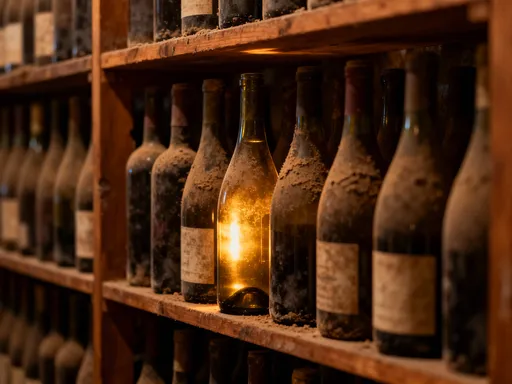
Authenticity is another cornerstone of value. A bottle’s condition — its label integrity, fill level, and storage history — can make or break its worth. A single improperly stored case can lose up to 40% of its potential resale value. This is why professional storage facilities, which provide temperature and humidity control along with verifiable audit trails, are essential for serious collectors. In this way, wine investment is not just about taste — it’s about discipline, documentation, and long-term vision. When approached strategically, a wine collection can become a silent partner in wealth preservation, quietly compounding in value while waiting for the right moment to deliver financial return.
From Corks to Capital Gains: How Wine Makes Money
Unlike dividend-paying stocks or rental properties, wine does not generate regular income. Its financial return comes entirely from capital appreciation — the increase in value between the time of purchase and the time of sale. This means the core strategy is simple in theory: buy high-quality bottles at favorable prices, hold them under optimal conditions, and sell when market demand and pricing align. However, the execution requires patience, research, and a clear understanding of wine’s unique market dynamics.
The lifecycle of a collectible wine begins at release, often through a system known as en primeur, where buyers purchase wine before it is bottled, based on barrel tastings and critic scores. These early purchases can offer significant discounts compared to future market prices, especially for highly rated vintages. For example, a case of a top Bordeaux wine might be available en primeur for $1,200, but within ten years, the same case could trade for $3,500 or more on the secondary market. This kind of appreciation is not guaranteed, but it is not uncommon for elite producers with strong track records.
Market demand is heavily influenced by wine ratings from influential critics such as Robert Parker or publications like Wine Spectator. A single 98-point score can dramatically increase a wine’s value overnight. Similarly, scarcity plays a crucial role — a small production run from a legendary vintage, such as 1982 Bordeaux or 1990 Barolo, becomes more valuable as bottles are consumed over time. The fewer remaining, the higher the price tends to climb. This is why long-term holding is often more profitable than short-term speculation. A wine that doubles in value over 15 years may underperform in the first decade, tempting impatient owners to sell too soon.
However, appreciation is not automatic. Poor storage can ruin even the most promising bottle. Exposure to heat, light, or vibration accelerates aging and can lead to premature oxidation, drastically reducing marketability. A bottle with a low fill level or damaged label may still be drinkable, but its resale value could be cut in half. Additionally, market trends shift. While Bordeaux and Burgundy have dominated the investment landscape for decades, rising interest in Italian, Rhône, and even Californian wines has created new opportunities — and risks. What is in demand today may not be tomorrow, underscoring the importance of diversification and ongoing market awareness.
Real-world examples highlight both the rewards and risks. One collector purchased a case of 1989 Château Pétrus for approximately $2,000 in the early 1990s. By 2020, that same case was valued at over $80,000 at auction. Yet another investor bought multiple cases of a highly rated 2005 Napa Cabernet, expecting similar gains. Due to oversupply and shifting consumer preferences, the wine’s value plateaued, yielding minimal returns after two decades. These cases illustrate a vital truth: wine investment is not passive. It requires active management, continuous learning, and a willingness to let time work in your favor. When done right, the returns can be substantial — not just in financial terms, but in the satisfaction of building a legacy collection.
The Tax Trap Most Collectors Don’t See Coming
For many wine enthusiasts, the idea of paying taxes on a bottle they’ve cherished for years comes as an unwelcome surprise. Unlike traditional investments, where tax implications are more widely understood, wine often flies under the radar — until it’s time to sell. In most countries, profits from the sale of collectible wine are treated as capital gains, subject to taxation based on holding period, profit amount, and ownership structure. Yet because wine is often acquired casually, without formal record-keeping, collectors may find themselves unprepared when tax season arrives.
Consider a real scenario: a collector in the United Kingdom purchased a case of 2000 Château Margaux for £3,000 in 2005. By 2023, the case sold at auction for £25,000. On the surface, this appears to be a £22,000 profit. However, because the UK treats collectibles differently from equities, the gain was subject to Capital Gains Tax at a rate of up to 28% for higher-rate taxpayers. After fees and taxes, the net return was closer to £16,000 — a significant reduction. Worse, the collector had not kept receipts or storage records, making it difficult to prove acquisition cost and triggering additional scrutiny from tax authorities.
The rules vary by jurisdiction, but common pitfalls include misclassifying wine as a personal possession rather than an investment asset. In the United States, for example, the IRS considers collectibles — including wine, art, and stamps — as capital assets. Gains on collectibles held for more than one year are taxed at a maximum rate of 28%, compared to 20% for most long-term capital gains on stocks. Short-term gains, from wine held less than a year, are taxed at ordinary income rates, which can exceed 37%. This means that flipping a bottle quickly for a small profit could result in a higher effective tax rate than holding a stock for decades.
Another issue is the lack of cost basis documentation. Many collectors buy wine through auctions, private sellers, or even as gifts, without keeping detailed records. Without proof of purchase price, tax authorities may assume the lowest possible cost basis, leading to higher taxable gains. Additionally, selling through informal channels — such as private resale or online marketplaces without reporting — can trigger audits or penalties if discovered. In some cases, frequent selling may even be interpreted as a trade or business, subjecting the seller to self-employment taxes.
The lesson is clear: ignorance of tax rules does not exempt one from them. A seemingly profitable sale can become a financial setback when taxes, fees, and penalties are factored in. The good news is that with proper planning, these outcomes are avoidable. By understanding the tax framework early and maintaining meticulous records, collectors can protect their returns and avoid costly surprises. The difference between a net gain and a net loss often comes down to preparation — not the wine itself, but how it is managed from a financial perspective.
Structuring Ownership for Maximum Tax Efficiency
How you legally own your wine collection can have a profound impact on your tax liability and overall financial outcome. Holding bottles personally is the most common approach, but it may not be the most efficient. Depending on your country of residence and the scale of your collection, alternative ownership structures — such as trusts, limited companies, or specialized investment funds — can offer significant advantages in terms of tax deferral, liability protection, and estate planning.
In jurisdictions like the United Kingdom, for example, collectibles held within an Individual Savings Account (ISA) or Self-Invested Personal Pension (SIPP) are not eligible, meaning wine must be held outside tax-advantaged wrappers. However, if the collection is held through a properly structured company, certain expenses — such as storage fees, insurance, and advisory costs — may be tax-deductible as business expenses. This can reduce taxable income in the short term, even if the wine itself is not yet sold. Similarly, in countries with favorable corporate tax regimes, establishing a holding company in a low-tax jurisdiction may allow for more efficient capital gains treatment, provided the arrangement complies with local anti-avoidance rules.
Trusts are another option, particularly for high-net-worth individuals looking to pass assets to future generations. A properly drafted trust can help minimize inheritance or estate taxes while maintaining control over when and how the collection is distributed. In the United States, for instance, an irrevocable trust can remove the wine from the owner’s taxable estate, potentially reducing exposure to federal estate tax, which applies to estates exceeding $12.95 million in 2023. The trust can also specify that sales proceeds be reinvested or distributed according to predetermined rules, ensuring the collection is managed according to the owner’s wishes.
Specialized wine investment funds offer a different model altogether. These funds pool capital from multiple investors to purchase and manage curated portfolios of fine wine. Investors benefit from professional selection, storage, and sale execution, along with consolidated tax reporting. While returns are shared and fees apply, the administrative burden is significantly reduced. Additionally, some funds are structured as regulated financial products, providing greater transparency and investor protection.
The choice of structure depends on individual circumstances, including the size of the collection, investment goals, and tax residency. There is no one-size-fits-all solution. However, the key takeaway is that ownership structure is not a detail to be decided at the point of sale — it should be considered from the outset. Consulting with a qualified tax advisor or wealth planner before acquiring high-value bottles can help ensure that the collection is set up for long-term success. By aligning legal ownership with financial objectives, collectors can enhance returns, reduce risk, and create a more sustainable legacy.
Timing the Exit: When to Sell Without Losing to Taxes
Selling a prized bottle at the peak of its market value is only half the battle. The other half is ensuring that the tax treatment of the sale preserves as much of the profit as possible. In many countries, the length of time an asset is held determines its tax classification. For example, in the United States, assets held for more than one year qualify for long-term capital gains treatment, which carries a lower tax rate than short-term gains. The same principle applies in the UK, Canada, and Australia, where extended holding periods can lead to reduced tax liability or even exemptions.
This makes timing a critical factor in wine investment strategy. A bottle sold after 11 months may be subject to a much higher tax rate than if held for just one additional month. Similarly, some jurisdictions offer annual capital gains exemptions. In the UK, individuals have an annual exempt amount — £6,000 in 2023/24 — below which gains are tax-free. By staggering sales over multiple tax years, collectors can stay within this threshold and minimize their overall tax burden. This approach requires careful planning and record-keeping, but the savings can be substantial.
Another tactic is to offset wine gains with losses in other asset classes. If a collector has experienced capital losses in stocks, real estate, or other investments, those losses can often be used to reduce taxable gains from wine sales. In the U.S., for example, capital losses can be carried forward indefinitely to offset future gains. This means a strategic sale in a year with available loss carryforwards can result in little or no tax liability. Even within a wine portfolio, selling underperforming bottles at a loss can help balance out gains from top performers.
Documentation plays a dual role: it supports market value claims and serves as a tax record. A complete provenance trail — including purchase receipts, storage logs, insurance appraisals, and auction results — not only enhances buyer confidence but also strengthens the seller’s position with tax authorities. In the event of an audit, these records can substantiate cost basis, holding period, and intent, reducing the risk of penalties. Digital tools, such as wine portfolio trackers and cloud-based storage logs, make it easier than ever to maintain this information in an organized, accessible way.
The goal is not to avoid taxes — that would be illegal — but to manage them efficiently within the bounds of the law. By aligning sale timing with tax cycles, leveraging exemptions, and maintaining thorough records, collectors can keep more of what they earn. This is not about speculation; it’s about stewardship. The most successful wine investors are not those who chase trends, but those who plan with precision and act with discipline.
Practical Steps to Build a Tax-Aware Wine Portfolio
Building a wine collection that serves both personal enjoyment and financial goals requires intentionality from the start. The first step is selecting the right wines. Focus on producers with a history of consistent quality and market demand. Look for vintages that have received high critical scores and are known for longevity. Limit purchases to wines that come with verifiable provenance, especially for older or rare bottles. Avoid impulse buys, even if they seem like a good deal — without proper documentation, they can become tax liabilities rather than assets.
Next, establish a valuation log. This should include the date of purchase, acquisition cost, bottle condition, storage location, and current market value. Update it annually using reliable price guides such as the Liv-ex Market Price Tool or Wine-Searcher. This log becomes the foundation of your tax reporting and helps track performance over time. Consider using digital portfolio management tools that integrate with auction data and market indices, providing real-time insights and automated alerts for price movements.
Storage is another critical component. Never store investment wine at home unless you have a climate-controlled cellar with monitoring systems. Instead, use professional storage facilities that provide temperature and humidity control, security, and audit-ready records. Many reputable providers offer services specifically designed for collectors, including inventory tracking, insurance coordination, and direct auction consignment. These features not only protect the wine but also strengthen your tax position by providing third-party verification of care and custody.
Finally, consult a tax advisor early — not after a sale, but before your first purchase. Discuss your goals, residency, and intended holding period. Determine whether personal ownership is sufficient or if a trust, company, or fund structure would be more appropriate. Establish a system for record-keeping and reporting. By integrating tax planning into the investment process from day one, you create a framework for long-term success. This disciplined approach separates casual collectors from strategic investors, turning passion into purpose.
The Bigger Picture: Wine as Part of a Balanced Wealth Strategy
Wine should not be viewed as a standalone investment, but as one element of a diversified wealth strategy. While it can deliver strong returns, it also carries unique risks — illiquidity, market volatility, and storage dependency. The prudent approach is to allocate only a small portion of one’s portfolio to alternative assets like wine, typically between 5% and 10%, depending on risk tolerance and financial goals. Within that allocation, wine offers distinct advantages: it is a physical asset, resistant to digital disruption, and often performs well during periods of inflation when paper assets lose purchasing power.
Its low correlation with traditional markets means that when stocks decline, fine wine prices may remain stable or even rise, providing a hedge against economic uncertainty. Unlike real estate or private equity, wine requires no active management — no tenants, no renovations, no board meetings. Yet it still demands attention: monitoring, documentation, and periodic rebalancing. The most successful investors treat their collection not as a hobby, but as a disciplined extension of their financial plan.
Ultimately, the goal is not to get rich quickly, but to preserve and grow wealth over generations. A well-curated wine collection can become a family legacy — something to be enjoyed, shared, and passed down. When structured wisely, it can also provide financial flexibility, offering liquidity when needed without disrupting core investments. By combining passion with planning, collectors can achieve a rare balance: emotional satisfaction and financial prudence.
The story of wine investment is not about luck or speculation. It is about foresight, education, and careful execution. With the right mindset and tools, your cellar can do more than hold bottles — it can help secure your future. Not every bottle needs to be an asset, but every decision should be intentional. In the end, the most valuable vintage is not the one in the bottle, but the one you’ve built over time — a legacy of wisdom, care, and smart stewardship.